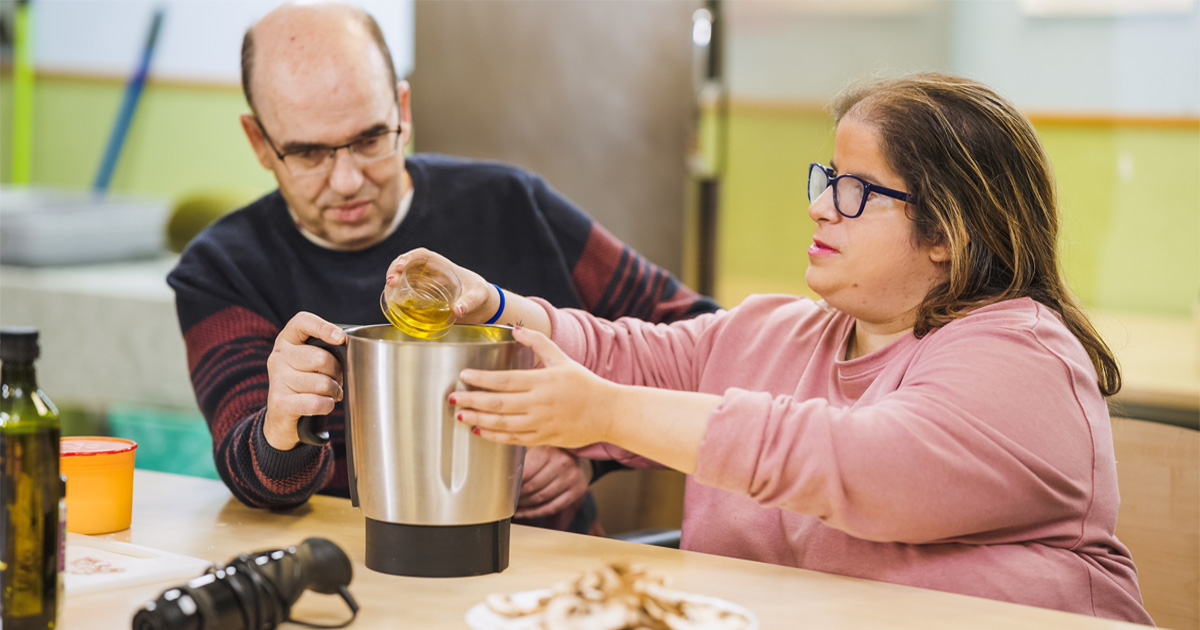
If you are exploring OPWDD day programs for yourself or someone you care for, you may be wondering what actually happens once the day begins. Is there a fixed schedule? Are activities mostly recreational? How much time is spent building practical skills?
A typical day can include a mix of skill development, social interaction, community activities, personal goals, and everyday routines. However, there is no single schedule that applies to everyone. Day Habilitation is intended to reflect individual needs, abilities, preferences, and goals.
If you are comparing different types of support, learning about building practical skills in everyday settings can also help you understand how another habilitation service approaches independence and community participation.
This guide walks you through what a typical day may involve, how activities connect to personal goals, and what you and your family can realistically expect.
One of the first things to understand about a day program is that there is not necessarily one standard schedule that every participant follows.
A person’s day may include structured activities, opportunities to practice skills, social interaction, community participation, meals or breaks, and time devoted to individual goals. What those activities look like can vary depending on the person’s abilities, interests, preferences, support needs, and established plan.
For example, one participant might spend part of the morning practicing communication skills before participating in a community activity. Another person may focus on completing a routine more independently, making choices, or strengthening social skills during a group activity.
This flexibility matters because meaningful progress looks different for everyone. A productive day is not measured by how many activities someone completes. It is better understood by whether the activities support goals that are useful and meaningful to that individual.
The schedule can also change from day to day. Some activities may happen regularly because repetition helps reinforce a skill, while others may change according to individual goals, community opportunities, or planned experiences.
Activities should have a purpose beyond simply keeping someone occupied.
Individualized goals can help determine what skills or experiences deserve attention during the day. These goals may relate to communication, social interaction, independent living skills, decision-making, safety awareness, self-advocacy, or community inclusion.
This means two people participating in the same program may have very different experiences.
Imagine that two participants visit a store as part of a community activity. One person might be practicing how to make a choice and communicate what they want. Another might be working on money management, locating an item, or completing part of a purchase with less assistance.
The setting is the same, but the goals are different.
This person-centered approach helps explain why it is difficult to describe a day program with one universal timetable. Activities should connect to what the person is working toward rather than expecting everyone to complete identical tasks.
New York regulations describing allowable habilitation services include areas such as self-advocacy, informed choice, community inclusion, relationship development, travel, communication, and skill development. You can review these regulatory provisions through Cornell Law School.
OPWDD Day Habilitation can involve different combinations of structured activities and individualized support. Rather than thinking of it as a classroom with one lesson plan, it may be more helpful to think about how different parts of the day create opportunities to practice useful abilities.
Depending on the person’s goals and authorized services, a day could involve:
Not every participant will work on all of these areas. The activities that make sense for one person may not be appropriate or useful for someone else.
You might also notice that an ordinary activity can support several skills at once. Preparing for an outing, for example, may involve following a schedule, gathering personal belongings, communicating preferences, practicing safety, and interacting with other people.
Day Habilitation services therefore do not need to make every learning opportunity feel like a formal lesson. Practical experiences can create natural opportunities for skill development.
Some of the most useful learning opportunities can come from ordinary routines.
Daily living skills may include organizing belongings, following a sequence of steps, making choices, communicating needs, managing simple tasks, or becoming more involved in personal routines. The appropriate level of support will depend on the individual.
Consider something as ordinary as getting ready for lunch. One person may practice choosing between available options. Another may work on communicating a preference, following a routine, cleaning their space afterward, or recognizing when they need assistance.
The goal is not necessarily to remove support as quickly as possible. Independence can mean different things for different people.
For some individuals, progress may mean completing an additional step without prompting. For others, it might mean making a clearer choice, asking for assistance, staying engaged in an activity longer, or becoming more comfortable with a familiar routine.
Families exploring how these types of goals fit into a larger network of services may also find it useful to understand how different supports can be coordinated around individual needs.
This broader perspective can make it easier to see why daytime activities should not be viewed in isolation. Skills and goals can connect with other parts of the person’s life and support plan.
A typical day does not have to take place entirely inside one program setting. Community participation can provide meaningful opportunities to practice communication, decision-making, social interaction, navigation, safety awareness, and other practical abilities.
For example, visiting a library can involve choosing an activity, asking a question, following community expectations, interacting with other people, and navigating an unfamiliar environment. A recreational outing might provide opportunities to practice taking turns, expressing preferences, or participating in a shared activity.
Community inclusion is about more than simply being physically present in a public place. The experience should provide an appropriate opportunity for participation, choice, relationship building, or skill development.
Social goals can also be practiced during activities within a program. A participant may work on greeting others, joining a conversation, sharing materials, respecting personal space, communicating when they need a break, or expressing an opinion.
Safety and individual support remain important throughout these experiences. New York regulations include protections applicable to day habilitation services, including provisions addressing the rights, safety, welfare, and appropriate support of individuals receiving services. These requirements can be reviewed through Cornell Law School.
Families often want to know how they can tell whether a program is actually helping. The answer may not always be obvious after a single day.
Developmental disability day programs can support goals that develop gradually through repetition, experience, and individualized assistance. Some changes may be easy to notice, while others may be subtle.
You might notice that your family member begins making a choice with fewer prompts. They may communicate more comfortably in a familiar setting, remember another step in a routine, participate more actively in a group, or become more confident during a community activity.
These changes can be meaningful even when they seem small.
It is also helpful to remember that progress is rarely perfectly linear. A person may perform a skill comfortably in one setting but need additional support somewhere unfamiliar. Changes in routine, environment, communication, or stress can affect how easily a skill is used.
Families can provide valuable observations about what happens outside the program. If a skill begins carrying over into home or community routines, that information may help the appropriate members of the support team understand how the person is progressing.
You can also learn more about how individualized OPWDD support can fit into everyday routines when considering how different types of assistance may connect with daily life.
No. A person’s activities can vary according to their individualized goals, preferences, support needs, planned community activities, and the structure of the program.
Some routines may remain consistent because predictability and repetition can be useful. Other activities may change throughout the week. The important point is that a day should not be viewed as a universal schedule that every participant must follow.
Skill development may involve communication, social interaction, decision-making, safety awareness, community participation, self-advocacy, relationship building, travel skills, or practical routines.
Which skills are appropriate depends on the individual’s needs and established goals. One person’s focus may be very different from another person’s even when they participate in similar activities.
No. Day programs for adults with developmental disabilities can involve much more than formal skill instruction. Depending on the program and the individual’s plan, the day may include social interaction, community experiences, structured activities, recreation, routines, and opportunities to make choices.
Learning can happen naturally within these experiences. An activity does not need to feel like a lesson to provide an opportunity for communication, participation, or greater independence.
They can be when appropriate to the person’s goals, services, and program. Community experiences can provide opportunities to practice skills in real settings rather than only discussing them in a program environment.
The activity itself should have meaning for the participant. A community outing should not be treated as automatically beneficial simply because it takes place outside the program.
Families can start by understanding which Life Plan goals are being addressed and noticing whether related skills appear in everyday routines.
You do not need to turn home life into a constant training session. Instead, appropriate opportunities can arise naturally. If someone is working on making choices, for example, everyday routines may offer chances to express preferences. Families can also share useful observations with the appropriate professionals when needs, abilities, or interests change.
A typical day should be understood as an individualized experience rather than a fixed schedule. The specific combination of activities, assistance, and community experiences can vary considerably from one participant to another.
The most important points to remember are:
When you focus on the purpose behind an activity rather than the activity alone, it becomes easier to understand how different parts of the day can support participation, confidence, choice, and skill development.
Learning what happens during a typical day can help you ask more useful questions when exploring available services. Instead of looking only at a program’s schedule, consider how activities connect to individual goals, how choices are encouraged, what kinds of support are available, and how progress is understood.
The right questions can also help you determine whether the program’s approach reflects the person’s preferences, abilities, communication style, and need for support.
If you have questions about available options and want to better understand how different supports may fit with individual needs and established goals, you can learn more about Children With Disabilities and OPWDD Services.
Understanding the available services can give you a stronger foundation for conversations with care managers, providers, and other professionals involved in planning appropriate support.
This article is provided for educational and informational purposes only. It is not medical, legal, eligibility, care-planning, or program authorization advice.
OPWDD eligibility, available services, authorization, program structure, Life Plan goals, and individual supports can vary according to a person’s circumstances and applicable program requirements. A typical day can also vary significantly among programs and participants.
You should consult the appropriate care manager, qualified professionals, service providers, and relevant state agencies for guidance about an individual’s eligibility, authorized services, support needs, and service planning.

Image Disclaimer. All imagery displayed on this website, whether licensed from stock photography providers such as Shutterstock or generated using artificial intelligence, is used strictly for illustrative and educational purposes. Such images are intended solely to visually represent the subject matter described in the accompanying titles and/or descriptions. They do not, in any way, depict actual clients, patients, caregivers, employees, or other real individuals unless expressly stated otherwise. Any resemblance to a real person is purely coincidental, and no endorsement, testimonial, or representation of services is stated or implied by the use of such imagery.
reCAPTCHA Notice. This site is protected by reCAPTCHA and the Google Privacy Policy and Terms of Service apply.