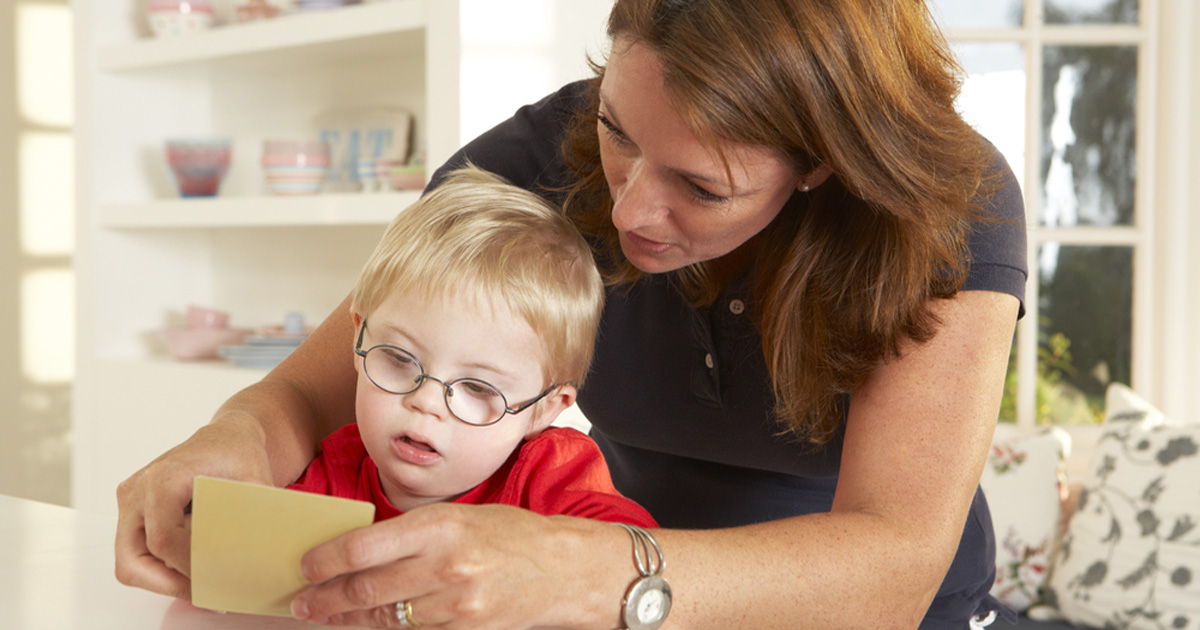
Communication affects nearly every part of your child’s day. It helps them express what they want, tell you when something feels wrong, make choices, participate in routines, and connect with the people around them. Building special needs communication skills does not necessarily mean focusing only on spoken words. Communication can happen through words, sounds, gestures, facial expressions, pictures, pointing, or other methods that work for your child.
You can encourage communication during ordinary moments instead of making every interaction feel like a lesson. Familiar activities are especially useful because your child already knows what to expect. Creating a predictable routine around your child’s individual needs can give you repeated opportunities to practice choices, requests, responses, and everyday communication.
The goal is not to make every child communicate in exactly the same way. It is to help your child find meaningful ways to understand others and express themselves.
Communication is broader than speech. Your child may use spoken words, but they may also communicate by pointing, looking toward an object, reaching, making sounds, changing facial expressions, using pictures, or using another communication method.
This is important because adults can sometimes focus so much on what a child is saying that they miss what the child is already communicating.
For example, imagine your child looks at the refrigerator, points toward it, and then looks at you. They may not have said, “I want a snack,” but the message may still be clear. Recognizing that attempt and responding to it can help your child learn that communicating has a purpose.
According to ASHA, caregivers can support children by paying attention and responding to their communication attempts. ASHA also suggests encouraging communication during daily routines and giving children access to communication tools they already use, such as pictures or augmentative and alternative communication methods.
The important idea is to meet your child where they are. You can encourage growth while still respecting the communication methods that already help them participate in daily life.
There is no single communication pattern that describes every child with special needs. One child may understand much more language than they can express verbally. Another may speak in sentences but have difficulty explaining feelings, answering questions, or communicating when overwhelmed.
You may notice differences between receptive language, which involves understanding communication, and expressive communication, which involves sharing thoughts, wants, feelings, and ideas.
Age matters too. Communication abilities develop alongside other areas of childhood development. CDC explains that developmental milestones include how children play, learn, speak, act, and move. Its age-based milestone resources include language and communication alongside other developmental areas. CDC also makes clear that milestone resources are not substitutes for standardized developmental screening tools.
Instead of comparing your child with another child, pay attention to their individual communication preferences and progress. What methods do they use consistently? What situations make communication easier? When do they seem frustrated? What communication cues do you notice before they use words, gestures, or pictures?
Those observations can help you better understand what your child is trying to tell you.
A communication attempt does not always look obvious. Sometimes it is a word or sentence. Other times, you need to pay closer attention.
Your child might reach toward an object, bring you something, point, make a particular sound, move away, look toward a preferred activity, or use gestures and facial expressions. These behaviors can carry meaning depending on the child and the situation.
Try observing what happens immediately before and after the behavior.
For example, if your child regularly brings you their shoes before going outside, that action may be part of how they communicate what they want. You can acknowledge the message and add simple language: “You brought your shoes. You want to go outside.”
This approach gives your child a model without ignoring the method they already used successfully.
It also helps to allow enough processing time. Asking several questions quickly can make an interaction harder. Ask a clear question or present a choice, then give your child an opportunity to respond.
If you do not understand, avoid pretending that you do. You can calmly ask your child to show you, point, try again, or use another familiar method. The goal is to keep the interaction supportive rather than making communication feel like a test.
Some of the most useful communication practice can happen during activities you already do together. You do not necessarily need to create a separate lesson every time you want to encourage communication.
At breakfast, you might offer two appropriate choices and give your child time to indicate which one they want. While getting dressed, you can name clothing items or ask which shirt they prefer. During play, you can describe what your child is doing without constantly asking questions.
You can also create small opportunities for making choices. Instead of automatically handing your child a preferred toy, you might present two options and allow them to indicate a preference using their established communication method.
Simple caregiver communication strategies can include:
Consistency matters more than turning every moment into structured practice. If your child communicates successfully and feels understood, that interaction itself can be meaningful.
Words are only one part of communication. Visual supports, objects, pictures, gestures, and facial expressions can sometimes make information easier to understand or give a child another way to express a message.
A picture schedule, for example, can show what will happen next. A child might point to a picture to make a choice. Another child might understand a spoken direction more easily when you combine it with a gesture.
These supports can be particularly useful when something in the day is changing. Knowing what comes next may reduce uncertainty and give your child another way to understand what you are communicating. Families working on this area may also benefit from learning ways to prepare a child for changes in familiar activities.
The right support depends on your child. A visual strategy that works well for one child may not be meaningful to another.
Pay attention to what your child understands consistently. If they already use a particular picture system, device, gesture, or other communication method, consistency among caregivers can help prevent unnecessary confusion.
Communication tools should support participation, not become another demand your child has to perform perfectly.
Your child’s communication needs may change as they grow. A method that works well today may need to be expanded, adjusted, or supplemented later.
For example, a young child might begin by pointing toward preferred items. Over time, they may learn additional gestures, pictures, words, phrases, or another communication system. Progress does not have to mean abandoning an existing method simply because a new one becomes available.
Your observations can help you recognize changes. Perhaps your child is becoming more comfortable making choices but still has difficulty asking for help. Maybe they communicate clearly at home but find unfamiliar environments more challenging.
Communication can also connect with independence. Being able to express a preference, indicate discomfort, ask for assistance, or communicate that something is wrong can help a child participate more actively in everyday situations.
As your child’s needs change, individualized assistance may become part of a broader support plan. Families exploring support that can complement individual abilities and everyday needs can consider how appropriate services may fit alongside established routines, communication preferences, and personal goals.
When you have concerns about your child’s speech, language, or development, qualified professionals can help determine whether evaluation or additional support may be appropriate.
Yes. Communication can include speech, gestures, facial expressions, pointing, pictures, communication devices, and other established methods. The most useful approach depends on your child’s abilities and needs. A child does not need to rely exclusively on spoken words for their communication to be meaningful.
Look for natural opportunities during everyday activities. Offer manageable choices, respond when your child tries to communicate, model simple language, and allow enough time for a response. Try to avoid turning every interaction into a question-and-answer exercise.
Stay calm and give your child another opportunity to communicate. You might ask them to point, show you, choose between options, or use another communication method they already know. If communication difficulties are frequent or concerning, consider discussing them with an appropriate qualified professional.
Familiar routines can provide repeated opportunities for communication because your child already understands the context. Meals, dressing, play, cleanup, and other activities can naturally include making choices, requesting help, following simple directions, and expressing preferences.
Consider discussing your concerns with your child’s healthcare provider or another qualified professional if you are worried about speech, language, understanding, loss of previously acquired abilities, or overall development. A speech-language pathologist may also be involved when appropriate. Professional evaluation is especially important when you need individualized guidance rather than general educational strategies.
Supporting communication is often less about finding one perfect technique and more about noticing what helps your child understand, participate, and express themselves.
Helping your child communicate more effectively can take patience. Progress may happen through a new word, a clearer gesture, a successful choice, a picture used at the right moment, or simply fewer misunderstandings during a familiar routine.
Try to focus on meaningful communication rather than perfection. When your child discovers that their attempts are noticed and respected, everyday interactions can become valuable opportunities for learning and participation.
You can also adjust your approach as your child’s abilities, preferences, and support needs change. What matters is that communication remains useful to your child and connected to real situations in their daily life.
Have questions about additional support that may fit your child’s individual needs? You can learn more about Children With Disabilities and OPWDD Services and how individualized assistance may support everyday participation, routines, and personal goals.
This article is provided for general educational and informational purposes only. It is not medical, developmental, diagnostic, therapeutic, or individualized care advice.
Every child develops and communicates differently. Communication approaches that are appropriate for one child may not be appropriate for another. Families who have concerns about a child’s speech, language, communication, development, or loss of previously acquired skills should speak with a qualified healthcare or developmental professional.
General developmental milestone information and communication strategies should not be used as a substitute for professional evaluation, standardized developmental screening, or individualized recommendations.

Image Disclaimer. All imagery displayed on this website, whether licensed from stock photography providers such as Shutterstock or generated using artificial intelligence, is used strictly for illustrative and educational purposes. Such images are intended solely to visually represent the subject matter described in the accompanying titles and/or descriptions. They do not, in any way, depict actual clients, patients, caregivers, employees, or other real individuals unless expressly stated otherwise. Any resemblance to a real person is purely coincidental, and no endorsement, testimonial, or representation of services is stated or implied by the use of such imagery.
reCAPTCHA Notice. This site is protected by reCAPTCHA and the Google Privacy Policy and Terms of Service apply.